Danube Research – Yesterday, Today, Tomorrow: Science Brings Together Generations and Countries
…
The event began with presentations on the history and development of Danube research in Austria, as well as on the importance of international cooperation in the Danube region. Subsequent panel discussions focused on the Danube as a socio-ecological system, integrated water management and the future of water protection. Experts from research, water management, nature conservation and international institutions highlighted the diverse interests along the river and the need for joint solutions in Austria and across the entire Danube region.
A particular highlight was the presentation of the 2026 Reinhard Liepolt Prize for Danube Research to Dipl.-Ing. Dr.techn. Sophia Steinbacher-Haid. The former PhD student at Karl Landsteiner University was honoured for her thesis on the use of molecular biological methods to analyse microbial water quality. In her research, she investigated, amongst other aspects, the potential impact of inland waterway transport on the water quality of the Danube and developed an innovative approach to assessing faecal contamination in major rivers. This award-winning work thus makes an important contribution to the understanding and sustainable development of the Danube region.
The Lifetime Achievement Award was presented to Hofrat Dr Gerhard Kavka, former Director of the Federal Institute for Water Quality and of the ‘Aquatic Microbiology’ Coordination Unit at the Federal Agency for Water Management. He joined the Association in 1979 and served on the Executive Board from 1995 to 2015, including eight years as Vice-President. In his numerous roles, Dr Kavka, as the person responsible for the monitoring and assessment of water bodies in accordance with the EU Water Framework Directive, made an exceptionally important contribution to safeguarding the water quality of Austrian water bodies.
In the afternoon, international experts presented the latest research findings. The focus was on new findings from the Joint Danube Survey 5, including studies on chemical pollution, aquatic biodiversity and microbiological water quality. Another key element of the programme was dedicated to the dialogue between science and society – ranging from citizen science projects and educational initiatives to creative communication formats, interspersed with a song about the EU Mission project DANSER by songwriter and scientist Ronald Pöppl.
To conclude, key challenges for the future of the Danube region were presented and discussed, including the impact of climate change on water bodies and the management of invasive species. As a river system linking numerous European countries, the Danube symbolises active cross-border cooperation. The anniversary event highlighted just how important this joint commitment will remain in the future.
More information about the event: Science, Song, and the Danube: “Yesterday, Today, Tomorrow” Brings Generations of River Research Together | ICPDR – International Commission for the Protection of the Danube River
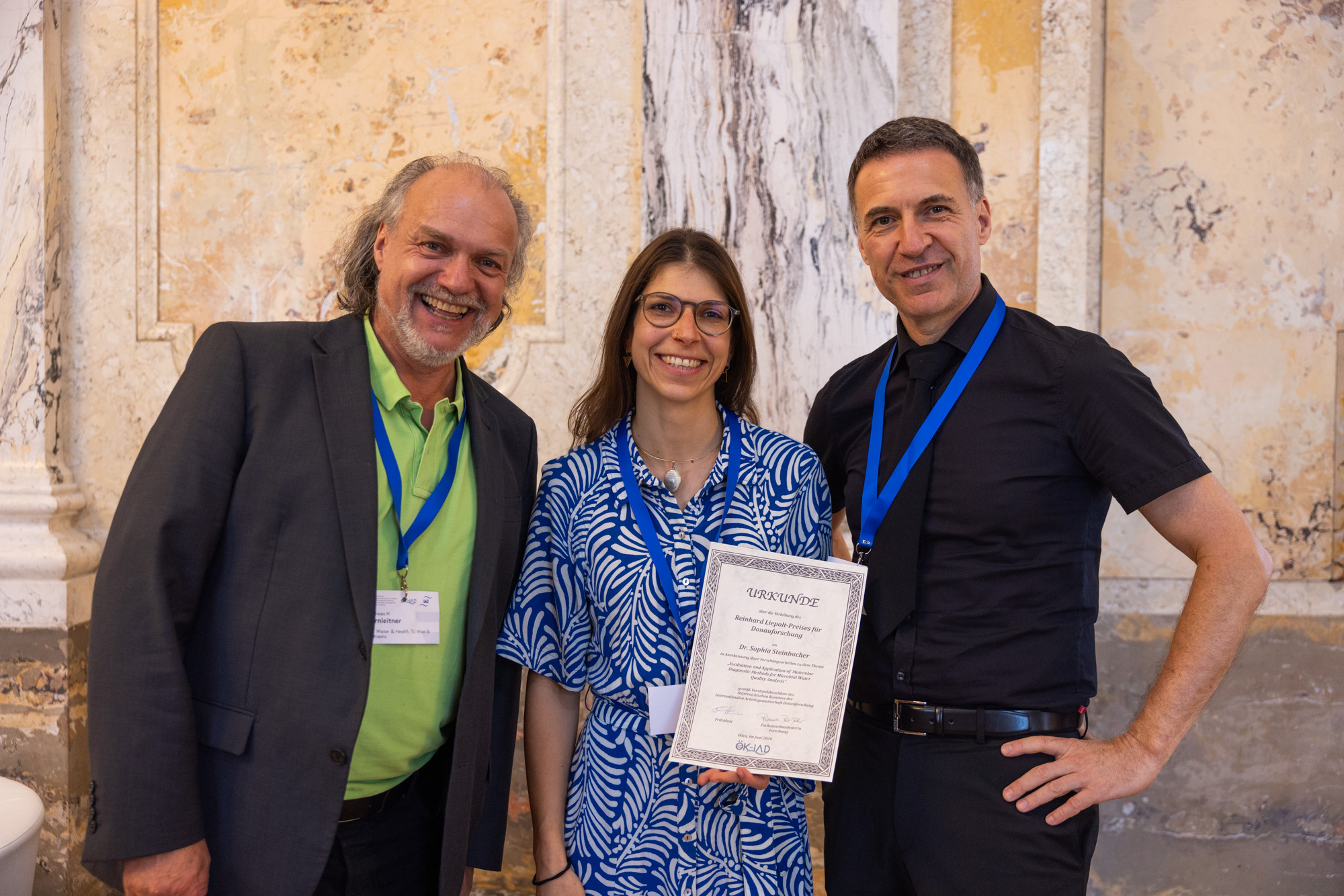
Liepolt Prize winner Sophia Steinbacher-Haid with her supervisors Andreas Farnleitner (left) and Alexander Kirschner (right)
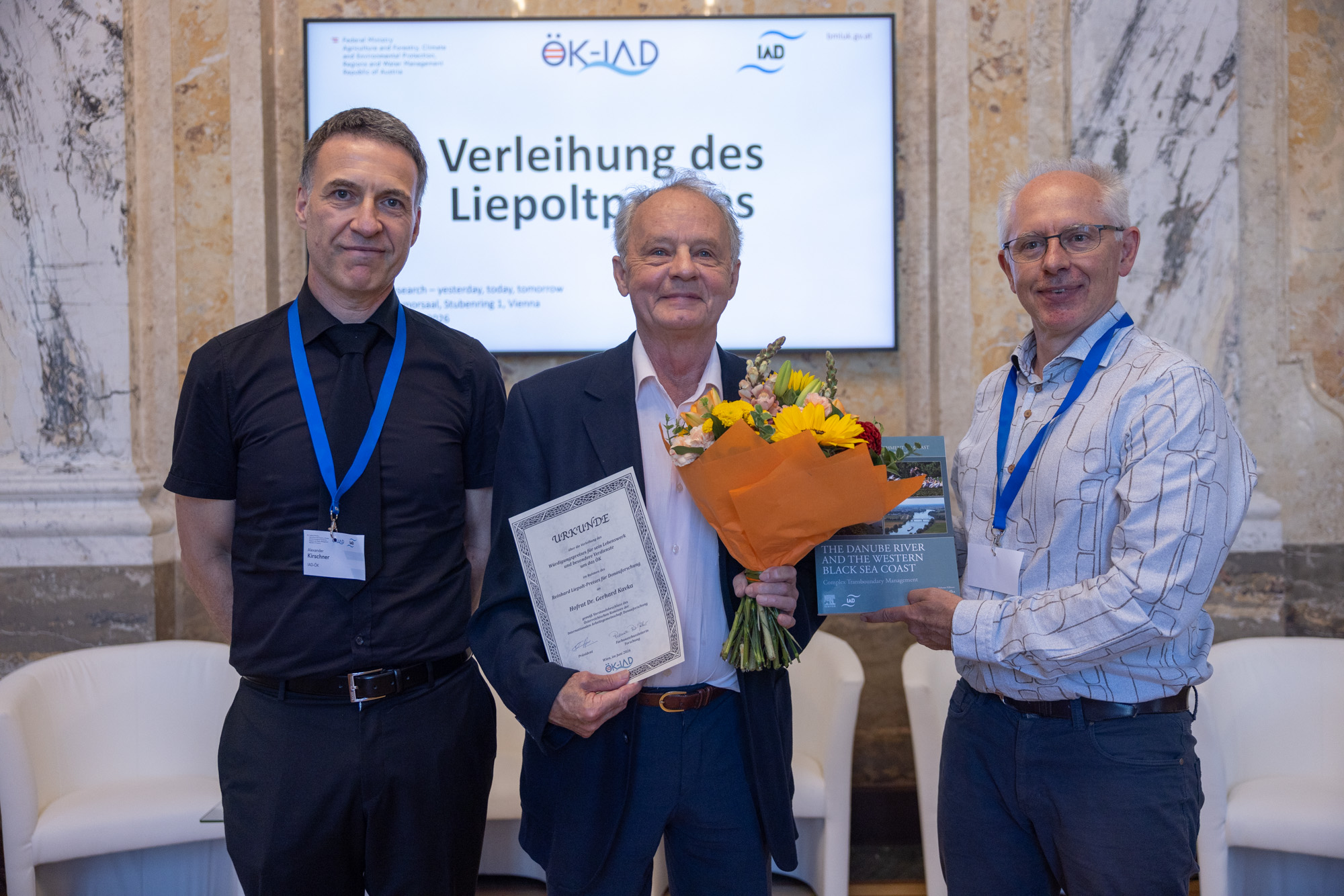
Lifetime Achievement Award winner Gerhard Kavka with ÖK-IAD President Thomas Hein (right) and Alexander Kirschner (left)